


Partners and Funders

Community Health Access and Environmental Conservation (CHAEC)
Community Health Access and Environmental Conservation (CHAEC) is non-profit working with Maasai and other indigenous people in the National Conservation Area (NCA) in Tanzania to provide mobile health care and training to semi-nomadic families who cannot access essential services. CHEAC provides antenatal care, vaccinations, deworming, child growth monitoring, primary care medical consultations and treatment, and health education sessions on disease prevention and environmental sanitation. CHAEC serves many women who participate in the WMI loan program.
Cordes Foundation
Connecting social entrepreneurs with the resources they need, convene events to strengthen the ecosystems of impact investing and social entrepreneurship, and catalyze 100% of our balance sheet for impact. WMI has received numerous infrastructure grants from the Cordes Foundation.

The International Foundation
The IF partners with poor communities in the developing world to improve their health, education and incomes, while strengthening local capacity to sustain their benefits.
Lewa Wildlife Conservancy
A UNESCO World Heritage Site since 2013, The Lewa Wildlife Conservancy and Borana Conservancy at the foothills of Mount Kenya, are protecting the last of northern Kenya's black rhinos from extinction, as well as expanding conservation of other major African wildlife through community-centric conservation. across northern Kenya and beyond. In 2015, Lewa and Borana took an unprecedented step by removing Working in collaboration with local residents and village leaders to implement livelihood based programs linked to wildlife conservation, WMI partners with Lewa to offer business loan and training to thousands of rural women in the communities surrounding the conservancy.
Maasai Partners
Maasai Partners provides the people of Northern Tanzania with programs to improve their standard of living through access to quality education, health care and a means to achieve their own financial independence and security. WMI began partnering with Maasai Partners over a decade ago to serve women who live in remote locations on the Ngorongoro Plateau.
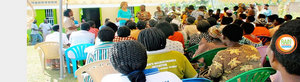
RAIN Uganda
RAIN Uganda (Responding to HIV/AIDS and Intervening for the Needy) is a Ugandan nonprofit run by volunteers that provides education and health resources throughout eastern Uganda. Most of the volunteers are health practitioners who want to share their knowledge with rural populations that lack access to critical information about common health care issues affecting their communities. RAIN Uganda has visited WMI members in Buyobo to provide cervical cancer education, and to conduct cervical cancer screenings and HIV tests.
Resilient Communities Africa Foundation (ReCAF)
ReCAF address socio-economic and environmental challenges facing local and marginalized communities in northern Tanzania to adopt resilient mechanisms and thrive through community-oriented sustainable development initiatives such as microloans/business training, solar projects, water access, and youth scholarships.

Sarara Foundation
The Sarara Foundation is working to protect the 850,000-acre Matthews Forest Range, in the heart of Northern Kenya, the wildlife, and Indigenous Samburu who call this land their home. It supports maintaining the local biodiversity that is key to combatting the climate crisis, as these areas are major carbon sinks. The cycle of poverty in the local Indigenous communities is deepening due to rapid urbanization, critical watershed damage, and changes in weather patterns that severely impact agriculture and livestock. WMI is working with Sarara to provide training for indigenous women who have small businesses.

SAS
SAS is the leader in business analytics software and services, and the largest independent vendor in the business intelligence market. SAS provides WMI with complimentary access to its JMP software so that each summer college interns can analyze data collected from loan program participants. Created by SAS for statistical discovery, every product in the JMP software suite is visual and interactive, comprehensive and extendible. JMPJMP gives WMI the ability to visually depict the data so that it's easily understood by foundations and corporations that want to support WMI. JMP partners with a wide range of consultants and vendors who include JMP as a key component in their businesses.
Sun24
Sun24 is a nonprofit that helps the poorest of poor in developing countries with cookstoves, solar lights and eyeglasses. WMI partners with Sun24 to bring cleaner cooking and solar lighting products to rural women and their families.

Together Women Rise
WMI is proud to have been awarded a Together Women Rise sustaining grant in the amount of $25,000/year for 3 years. TWR is empowering women and girls living in extreme poverty.

Western Turville Wells for Tanzania (WTWT)
Western Turville Wells for Tanzania (WTWT) provides initiatives for the Maasai people in and around the Ngorongoro Conservation Area (NCA). These resilient people have historically led sustainable lives in harmony with the wildlife of East Africa. Since the government moved them off their land in the Serengeti in 1959, their lives have become increasingly difficult, resulting in widespread hunger and critical health issues. Regulations limit their ability to care for their families and manage their livestock. WTWT projects include clean water strategies, food supply management, adult education, improved health care facilities, and health education, including workshops to prevent female genital mutilation. WMI began partnering with WTWT in 2015 to bring microloans, business skills training, and financial literacy education to the Maasai women in northeastern NCA.